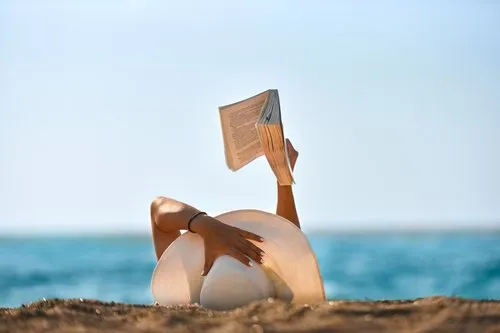
The best books of 2026 so far
Originally from The Economist. Read the original article on the publisher’s site.
Business, science and technology
A World Appears. By Michael Pollan. Penguin Press; 320 pages; $32. Allen Lane; £25 This delightful book looks at the enduring mystery of consciousness. Academic philosophising is not always page-turning, but Mr Pollan has a journalist’s eye for the surprising and intriguing.
Bonfire of the Murdochs. By Gabriel Sherman. Simon & Schuster; 256 pages; $29 and £25 An absorbing history of Rupert Murdoch. To understand the world’s most powerful news machine, you have to understand the family behind it. This saga is like “Succession”, but in real life.
The Intimate Animal. By Justin Garcia. Little, Brown Spark; 272 pages; $30. Penguin Life; £20 Humankind is facing an “intimacy crisis”, argues a leading sexologist. Part of the problem is the mismatch between the world in which our brains evolved and the one in which people now search for love.
Muskism. By Quinn Slobodian and Ben Tarnoff. Harper; 256 pages; $30. Allen Lane; £25 Just as Henry Ford provided the template for 20th-century capitalism, known as Fordism, Elon Musk offers one for the 21st. The authors provide a revealing portrait of the world’s richest man.
Project Maven. By Katrina Manson. W.W. Norton; 416 pages; $31.99 and £23 A scintillating account of the team of mavericks who put AI at the heart of America’s war machine. It is also a story of Silicon Valley’s shifting relationship with the Pentagon. One of the most important books on war and technology in years.
Culture and the arts
Like, Follow, Subscribe. By Fortesa Latifi. Gallery Books; 288 pages; $30 and £20 A fascinating exposé of “kidfluencing”. As parents broadcast tantrums and potty training on social media, “children’s privacy is traded for profits.”
Picky. By Helen Zoe Veit. St Martin’s Press; 304 pages; $29 Why do children become fussy eaters? The author decries changes in adults’ thinking that “allowed picky eating to hijack American childhood”.
Talking Classics. By Mary Beard. University of Chicago Press; 208 pages; $22.50. Profile Books; £16.99 Britain’s best-known classicist offers a spirited defence of her discipline. Like an archaeologist, she excavates classics from the layers of discourse that surround it.
Current affairs and politics
The Doom Loop. By Eswar Prasad. Basic Venture; 368 pages; $32. Hurst; £22 This riveting, depressing book argues that changes to the balance of power between countries have transformed the world economy into an engine for disorder.
Centrists of the World Unite! By Adrian Wooldridge. Allen Lane; 416 pages; £25. Published in America as “The Revolutionary Centre”; Pegasus Books; $35 This bracing manifesto charts a future for the modern era’s most successful philosophy. Liberalism, the author argues, must revive itself before it’s too late.
The Coming Storm. By Odd Arne Westad. Henry Holt; 256 pages; $27.99. Allen Lane; £22 Today’s world looks “quite a bit” like the world before 1914, argues a history professor. A third world war is plausible; this book reveals how to avoid one.
The Descent. By Marc Bennetts. Bloomsbury Continuum; 272 pages; £20. To be published in America in May; $30 To understand how Vladimir Putin dominates Russia, you must study how his propaganda works. Other books have explored the country’s disinformation state, but this one charts its evolution into a wartime dictatorship.
How Africa Works. By Joe Studwell. Atlantic Monthly Press; 416 pages; $32. Profile Books; £25 One of the most high-profile books on Africa of the past few years. This is valuable reading for anyone curious to understand “the last great frontier of global development”.
If Russia Wins. By Carlo Masala. Translated by Olena Ebel and Ruth Ahmedzai Kemp. Atlantic Monthly Press; 120 pages; $20 and £14.99 Imagining how the West might lose in Ukraine is a first step to avoiding disaster. This chilling book draws on two years of data, research and chats with officials to offer a scenario for a Russian victory.
London Falling. By Patrick Radden Keefe. Doubleday; 384 pages; $35. Picador; £22 Zac Brettler said he was an oligarch’s son. The lie had tragic consequences. Mr Radden Keefe offers a sad, strange portrayal of London’s underworld.
The Next World War. By Peter Apps. Headline; 464 pages; $32. Wildfire; £25 A journalist blends vivid reporting with shrewd analysis in this study of great-power conflict. Mr Apps puts the odds of another world war in the next decade at 30-35%.
Fiction
Arabesques. By Serhiy Zhadan. Translated by Isaac Stackhouse Wheeler. Yale University Press; 120 pages; $18 and £12.99 This collection of short stories elegantly describes ordinary people enduring war in Ukraine and offers a poignant portrait of Kharkiv, the author’s home town, which is some 40km or so from Russia.
Land. By Maggie O’Farrell. Knopf; 436 pages; $32. Tinder Press; 448 pages; £25 In 1865, on a remote peninsula of Ireland, a cartographer has an experience that transforms his life. A bold, epic novel about people and place, which artfully blends history and mysticism.
Lost Lambs. By Madeline Cash. Farrar, Straus and Giroux; 336 pages; $28. Doubleday; £16.99 The Flynns are a dysfunctional American family, but a chance to mend bonds emerges from an unlikely source. A rollicking read with vibrant wordplay, quirky characters and madcap scenarios.
This is Where the Serpent Lives. By Daniyal Mueenuddin. Knopf; 368 pages; $29. Bloomsbury; £18.99 A multigenerational epic set in Pakistan. This novel spans decades, exploring class, privilege and ambition.
Transcription. By Ben Lerner. Farrar, Straus and Giroux; 144 pages; $25. Granta; £14.99 A man conducts a magazine interview with his 90-year-old mentor but fails to record it. This book offers shrewd insight into art and technology, friendship and fatherhood, and the reliability of memory.
Vigil. By George Saunders. Random House; 192 pages; $28. Bloomsbury; £18.99 The author behind one of this century’s best books, “Lincoln in the Bardo”, is back with a deft novel, which unfolds in the final hours of a former big-oil CEO’s life. The prose zips with quick-fire repartee.
Whistler. By Ann Patchett. Harper; 304 pages; $30. Bloomsbury; £20 Daphne reconnects with Eddie, her former stepfather, and finally learns the truth about why he divorced her mother. A tale of secrets and lasting love, enriched by sharply drawn characters.
History
A Kingdom and a Village. By Simon Morrison. Knopf; 528 pages; $35. Bodley Head; £25 This technicolour chronicle of Moscow shows that, beneath the petro-funded sheen, the city is a domain of purges and paranoia. Frequent invasions punctuated the city’s rise from medieval backwater to imperial metropolis.
The Black Death. By Thomas Asbridge. Random House; 544 pages; $38. Allen Lane; 560 pages; £40 Although medieval people were used to sudden ends, the Black Death was devastating. The disease also changed society and art, frequently for the better, this enjoyable book argues.
Custody. By Lara Feigel. William Collins; 432 pages; £25 An excellent survey of social history through the lens of divorce law. The author casts her spotlight across nations and centuries, using seven subjects to show how women shaped attitudes about parenting after marital dissolution.
The Death of Trotsky. By Josh Ireland. Dutton; 384 pages; $35. John Murray; £25 How do you tell a gripping story when its ending is already known? This history of Leon Trotsky’s murder overcomes that problem. Mr Ireland’s book reads like a spy thriller.
Mafia: A Global History. By Ryan Gingeras. Simon & Schuster; 416 pages; $35 and £25 This engaging tale of how mafias have “helped define the making of the modern world” takes readers from classical Rome to Las Vegas today.
The Successor. By Mikhail Fishman. Translated by Michele Berdy. Pushkin Press; 800 pages; £35. To be published in America in May; $40 Was Vladimir Putin’s tyranny inevitable? One of Russia’s leading independent journalists tells the story of the country’s emergence from Soviet communism and its collapse into dictatorship.
This Land Is Your Land. By Beverly Gage. Simon & Schuster; 352 pages; $30 and £22 An enjoyable drive through America. From Philadelphia to California, a historian explores “the greatest tensions of American history”.
Memoir and biography
Ausländer. By Michael Moritz. Profile Books; 320 pages; £20. To be published in America by Pegasus Books in September; $29.95 This tale joins a growing list of books written by children of the Nazis’ victims. Sir Michael offers an engaging memoir of dislocation and an examination of how tragedy reverberates across generations.
The Game Changer. By Jon Ralston. Simon & Schuster; 400 pages; $30 Few American legislators understood their job as well as Harry Reid, Nevada’s representative in the Senate for 30 years. This biography argues he was one of the “most consequential national leaders of the 21st century”.
A Hymn to Life. By Gisèle Pelicot with Judith Perrignon. Translated by Natasha Lehrer and Ruth Diver. Penguin; 256 pages; $32. Bodley Head; £22 The author’s ordeal captured global attention and led to a change in France’s rape laws. Here Ms Pelicot emerges as an accidental heroine. What could be a dark, depressing chronicle is propelled forward by the force of her courage.
Strangers. By Belle Burden. The Dial Press; 256 pages; $30. Ebury Press; £18.99 The author documents a worst-case marital scenario, when her husband, without warning, announces the end of their relationship. This memoir is at once a horror story, a record of suffering and a cautionary tale. ■
This Economist article was legally licensed by AdvisorStream.
Related Articles

Ghost Tapping Scams Are on the Rise: What You Need to Know
While ghost tapping sounds like something outof a scary movie, it's a scam that can have real consequences.

Is London ready for driverless cabs and drone taxis?
Simon Mills looks at how prototypes designed for wide open spaces in California will operate in a busy and pedestrian-heavy city like London.
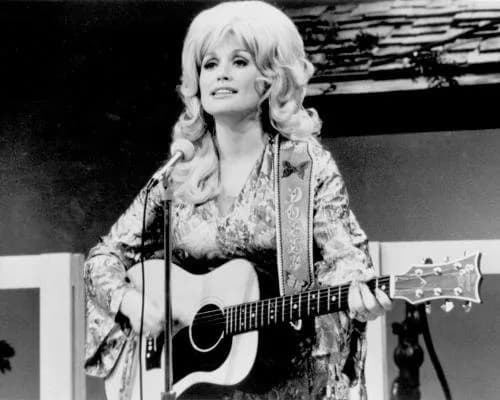
From Jolene to Islands in the Stream: Dolly Parton’s 10 best recordings
The late star created some of the most beloved country and pop songs in American music.